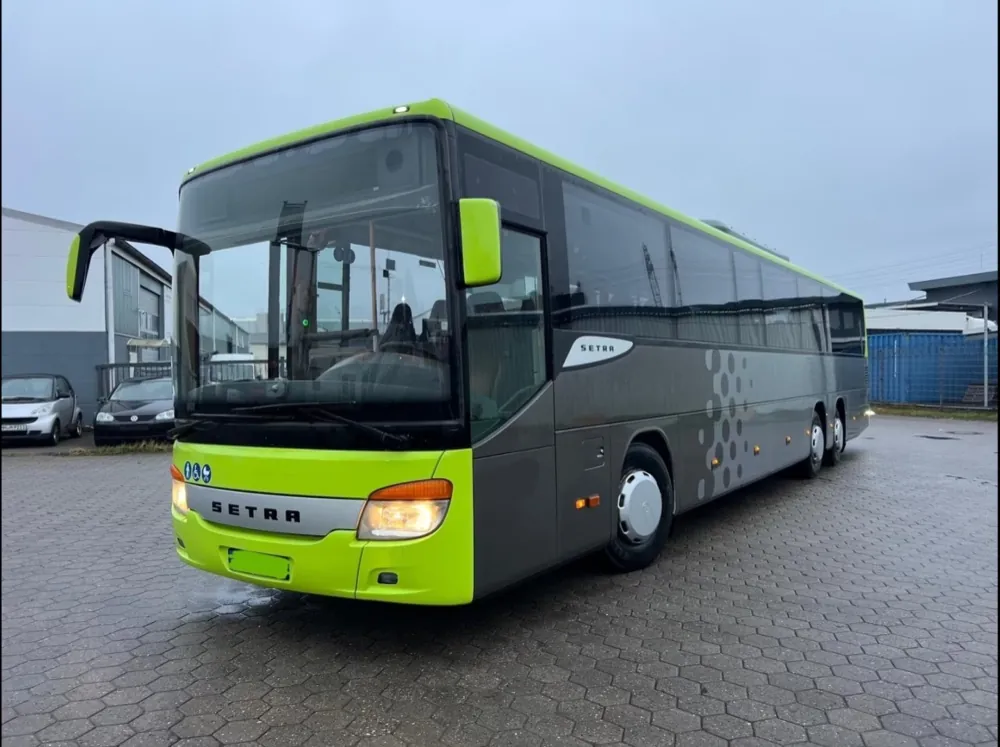
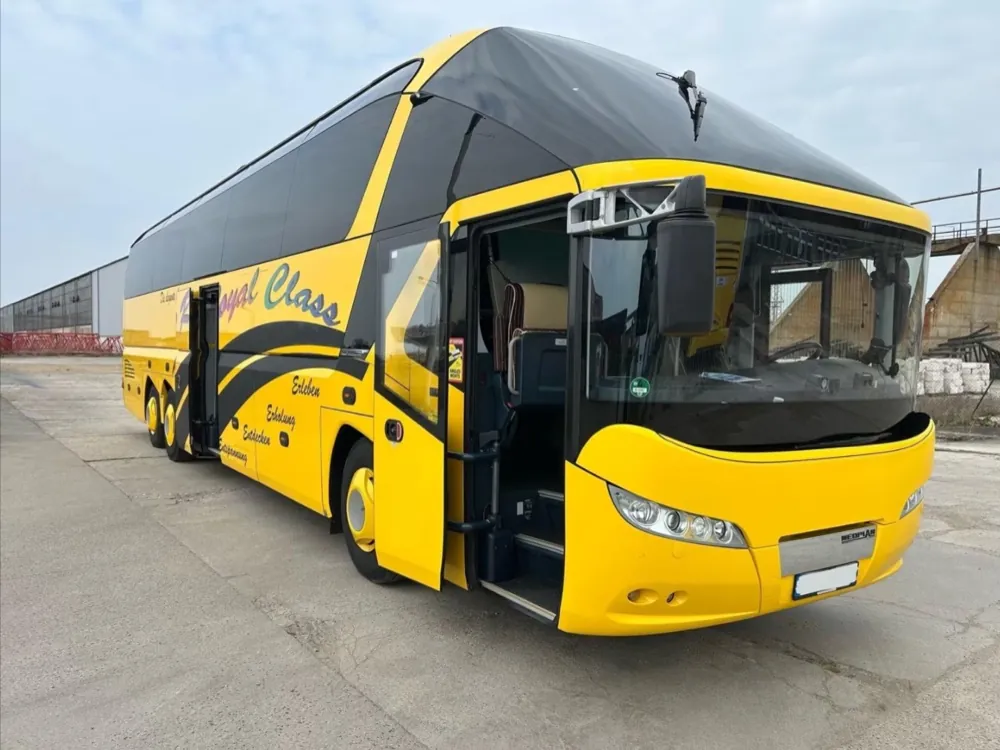
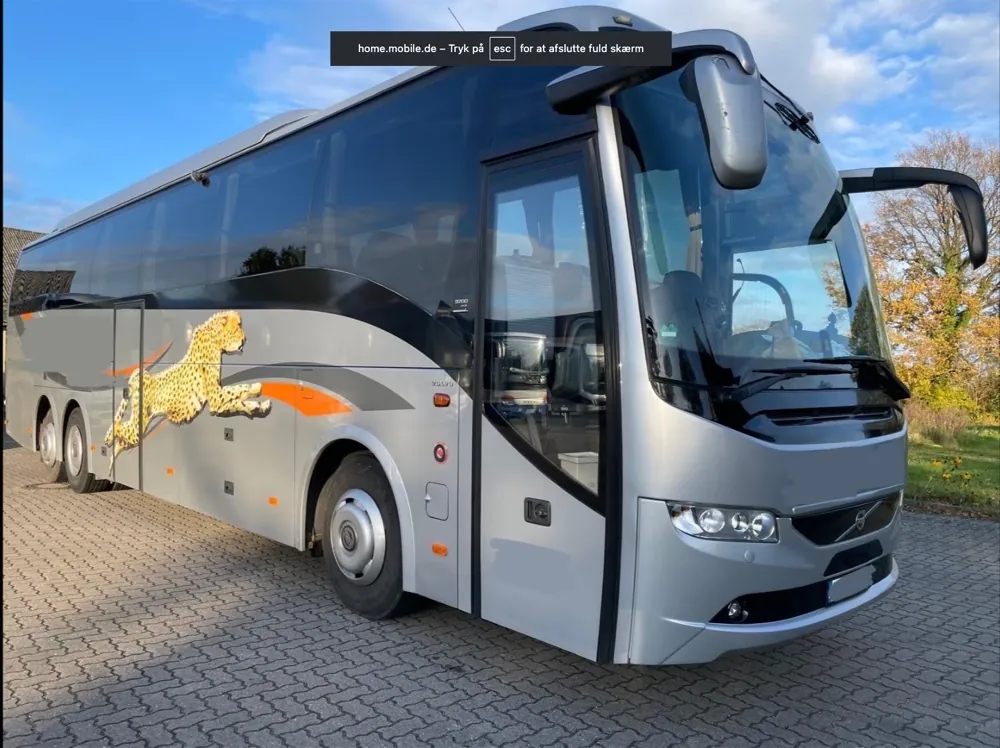
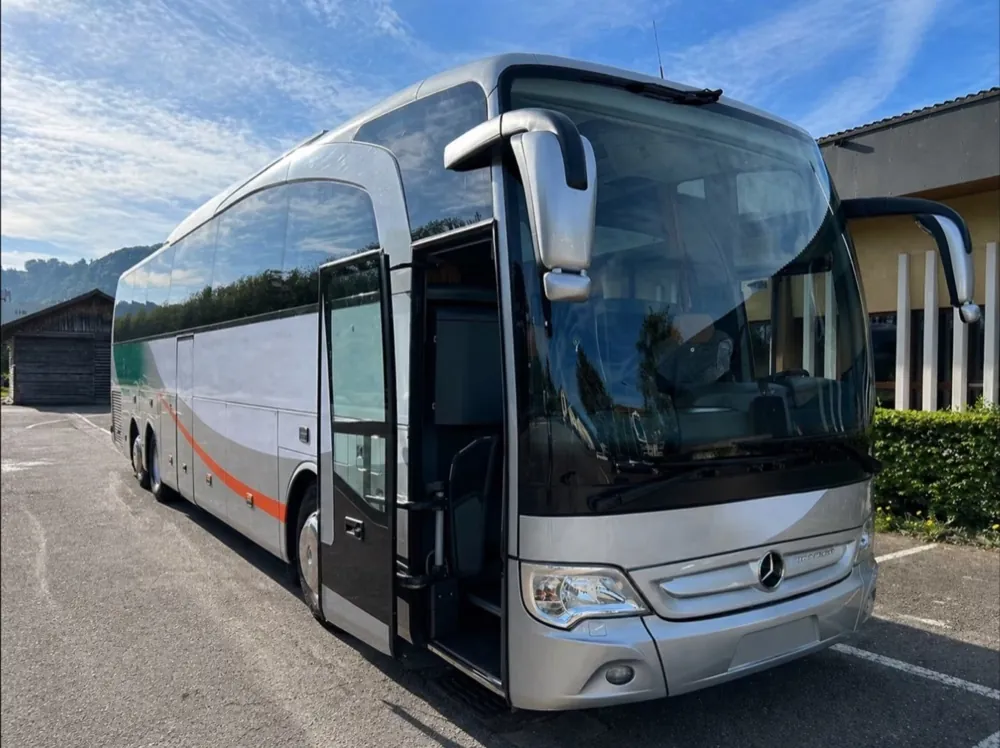
From an entry-level day-trip coach to a long-distance coach with toilet and kitchen: here are the real price ranges, backed by vehicles standing on our yard in Hamburg.
A used coach bus costs between €55,000 and €180,000 net. A 2013 Neoplan Starliner sells for around €113,500, a 2016 Mercedes-Benz Travego with Euro 6 for about €179,900. Older coaches without a toilet start well below that.
A new coach costs roughly €300,000 to €450,000 net, a new double-deck coach €500,000 to €700,000.
The used prices come from our current stock in Hamburg. New prices are typical market guide prices.
With a coach you pay mainly for comfort and range. A day-trip coach without a toilet is in a completely different price class from a long-distance coach with kitchen, toilet and driver sleeper cab. The ranges apply to roadworthy, inspected vehicles.
| Class | Equipment & seats | Price net |
|---|---|---|
| Midi coach | 8–10 m · 20–35 seats | €35,000 – €90,000 |
| Standard coach | 12–13 m · 48–55 seats, no toilet | €55,000 – €110,000 |
| Long-distance comfort coach | 12–14 m · toilet, kitchen, Euro 6 | €110,000 – €200,000 |
| Double-deck coach | 13–14 m · 70–85 seats | €90,000 – €250,000 |
| Interurban coach | 12–13 m · 55–62 seats | €35,000 – €120,000 |
All prices net, excluding VAT. The actual price always depends on the individual vehicle — call us for today’s stock.
New vehicles are often hard to justify for smaller operators. A six to ten year old coach with a well-documented history often costs a third of the new price and meets the same requirements for excursions and long-distance travel.
| Vehicle | Equipment | New price net (guide) |
|---|---|---|
| Midi coach | up to about 35 seats | €200,000 – €280,000 |
| Coach 12–13 m | Euro 6, standard equipment | €300,000 – €380,000 |
| Long-distance comfort coach | toilet, kitchen, driver sleeper cab | €380,000 – €450,000 |
| Double-deck coach | 13–14 m, full equipment | €500,000 – €700,000 |
Guide prices for the German market, depending on equipment and order quantity. We do not sell new vehicles; these figures are for comparison.
With a coach, the price depends not only on the technology but also on what passengers see and feel. These factors move the price the most.
Euro 6 is effectively required for long-distance routes, tenders and many city destinations. The premium over Euro 5 is considerable, but it pays off in where the coach can operate.
A toilet and kitchen move a coach straight into the next price class. Fridge, coffee machine, monitors and Wi-Fi also affect the resale value.
More seats mean more revenue per trip. Adjustable comfort seats in leather or fabric in good condition add real value — re-upholstering quickly costs five figures.
Long-distance coaches run mostly on motorways, which is easy on the drivetrain. 500,000 to 700,000 km is normal for a well-maintained coach; a complete service history matters most.
Mercedes-Benz Travego, Setra 400 and 500 series, and Neoplan Starliner and Cityliner hold their value best — partly because parts and workshops are available all over Europe.
A coach is a company’s shop window. Neutral paintwork without another operator’s logo saves the buyer several thousand euros in wrapping or repainting.
Coaches cover more kilometres than city buses but use less fuel per kilometre. Guide figures for a long-distance coach running about 80,000 km a year.
| Cost item | Basis | Cost per year |
|---|---|---|
| Fuel | approx. 25–32 l/100 km on motorways | €35,000 – €45,000 |
| Road tolls (Germany) | depending on axles and mileage | €5,000 – €15,000 |
| Maintenance & wear | services, brakes, air-conditioning | €7,000 – €14,000 |
| Tyres | 6 tyres, high mileage | €2,000 – €4,000 |
| Insurance | third-party & comprehensive, commercial | €3,000 – €6,000 |
| Roadworthiness test | annual, required by law in Germany | €300 – €600 |
Guide figures excluding staff, parking and administration. Tolls abroad, parking fees and driver expenses come on top for long-distance trips.
Not estimates, but vehicles standing on our yard in Hamburg right now. All prices net.
A used coach bus in Germany costs between €55,000 and €180,000 net, depending on year, emission standard and equipment. A new coach costs roughly €300,000 to €450,000 net. In our stock in Hamburg the range currently runs from €72,000 for a Setra S 417 UL to €179,900 for a Mercedes-Benz Travego with Euro 6.
Used coaches with a toilet and kitchen usually cost between €110,000 and €200,000 net. Comparable coaches without a toilet start at around €55,000. A toilet and kitchen always move a coach into the next price class, because they are what make long-distance work possible.
As a guide, a new 12 to 13 metre coach with Euro 6 costs €300,000 to €380,000 net. With toilet, kitchen and a driver sleeper cab it is €380,000 to €450,000. A new double-deck coach costs €500,000 to €700,000.
A used double-decker costs between €90,000 and €250,000 net depending on age and equipment; older city double-deckers are available from around €40,000. New double-deck coaches cost €500,000 to €700,000.
Yes, as long as the service history is right. Coaches run mostly on motorways, which is easy on engine and gearbox, so 500,000 to 700,000 km is normal for a well-maintained vehicle. Service records, the condition of the seating and freedom from rust matter more than the mileage alone. Every bus we sell is technically inspected first.
Mercedes-Benz Travego, Setra 400 and 500 series, and Neoplan Starliner and Cityliner achieve the most stable resale prices. One reason is that parts and workshops are available across Europe, another is demand on the used market in Eastern and Southern Europe.
All prices on this page and in our stock are net prices, excluding VAT. Business buyers in another EU country with a valid VAT number can buy free of German VAT as an intra-community supply.
Yes. We deliver across the EU, including to Austria, the Netherlands, Belgium, Poland, France and Italy, and organise transport and export documents on request. Registration then follows the rules of your country; your registration authority will tell you which documents it needs, for example a certificate of conformity (COC).
Tell us the intended use, the seat count and your budget — we will tell you honestly what is possible.